
Best Business Ideas for Students: The Ultimate Step-by-Step Guide to Campus Entrepreneurship
Balancing coursework with financial independence is a major challenge for college students. By their sophomore or junior year, many students realize that traditional part-time hourly jobs offer limited flexibility and little room for career growth.
Launching a small venture while still in school can be a valuable way to gain practical experience, explore career options, and potentially earn additional income. Beyond providing extra income, running a business equips you with real-world experience in financial planning, client negotiation, and time management—skills that classroom lectures simply cannot teach.
This comprehensive guide covers high-demand business ideas tailored for college students, essential digital tools to streamline operations, and proven strategies to scale your enterprise without sacrificing your GPA.
Key Takeaways
- Unmatched Market Access: College provides a built-in network of peers, mentors, and local customers with minimal overhead risk.
- Low Startup Costs: Leveraging digital skills (writing, design, video editing, tutoring) allows you to launch with near-zero capital investment.
- Time Management is Essential: Using scheduling tools and setting clear boundaries during exam weeks prevents academic burnout.
- Resume Differentiation: Hands-on entrepreneurial experience can give students additional examples of problem-solving, communication, and initiative to discuss with potential employers.
- Lean Execution: Test your service offering via simple landing pages before spending money on branding or equipment.
1. Why College is the Ideal Time to Start a Business
College provides a unique environment for entrepreneurial experimentation. You operate within a concentrated community of potential clients, have access to campus facilities, and benefit from mentorship from professors and alumni networks.
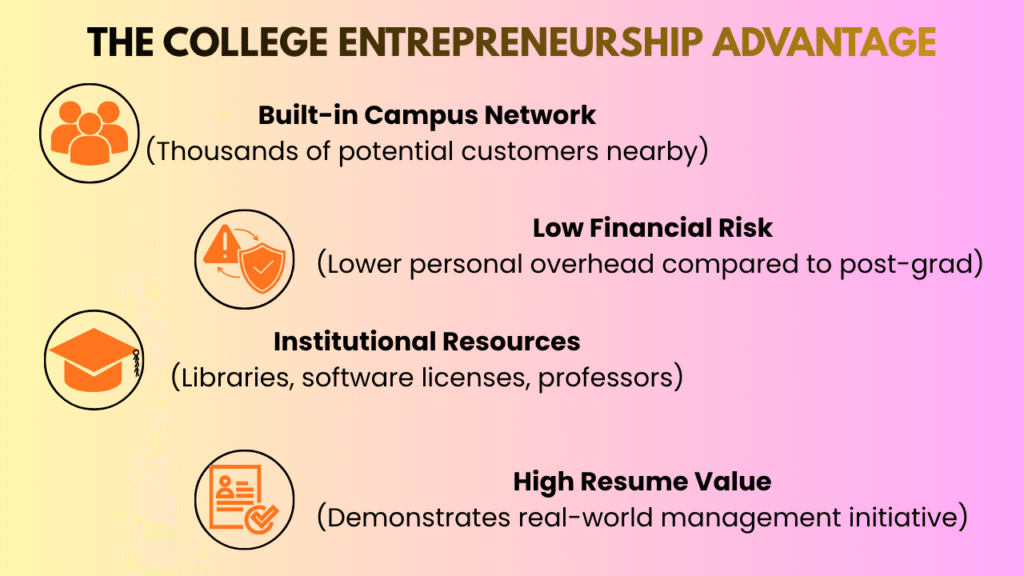
When you start a business after graduation, you face higher financial pressures like rent and full-time living expenses. In college, your downside risk is relatively low, making college a relatively low-cost environment to test small business ideas, learn from mistakes, and iterate before taking on larger financial commitments.
2. Top Low-Cost Business Ideas for Students
The most successful student businesses generally fall into two categories: Digital Services (which scale globally from a laptop) and Campus/Local Services (which leverage immediate geographic proximity).
Business Idea | Startup Capital Required | Skill Level Needed | Income Potential & Scalability |
Freelance Writing & Copywriting | Near Zero ($0 – $50) | Moderate (Writing, Research) | High (Hourly rate increases with portfolio strength) |
Graphic Design & Branding | Low ($20 – $100/mo for software) | Moderate to High (Adobe, Canva) | High (Can expand into a full-service creative agency) |
Academic Tutoring | Zero ($0) | High (Subject Mastery) | High Hourly Rate (Limited by personal hours) |
Short-Form Video Editing | Low to Moderate | High (CapCut, Premiere Pro) | Very High (Driven by high demand from content creators) |
Campus Concierge / Local Services | Very Low ($10 – $30) | Low to Moderate | Moderate (Predictable local cash flow) |
In-Depth Breakdown of Digital Service Ventures
1. Freelance Content Writing & Copywriting
Digital brands, SaaS companies, and local businesses constantly need blog articles, email newsletters, and website content. If you have strong writing habits and basic research skills, copywriting offers immediate cash flow with zero upfront inventory costs. Focus on specific niches, such as technical writing or finance, to command higher rates.
2. Short-Form Video Editing
With the rise of TikTok, Instagram Reels, and YouTube Shorts, content creators and small businesses struggle to keep up with video production demands. Learning short-form editing, color grading, and subtitle captioning can help you secure monthly retainer clients quickly.
3. Academic & Test Prep Tutoring
If you excel in challenging subjects like organic chemistry, calculus, or computer programming, tutoring offers high hourly margins. You can offer one-on-one sessions, run small group exam-prep bootcamps, or sell digital study guides directly to underclassmen.
4. Social Media Management
Small business owners rarely have time to create posts, write captions, or reply to customer direct messages daily. Offering a package that includes content planning, basic graphic design, and community management allows you to earn recurring monthly retainers.
Example: Computer Science Student
A computer science student who knows basic web development could start by building simple websites for local businesses. Instead of trying to serve everyone, they could offer one fixed package—such as a five-page business website with a contact form—and use their first few projects to build a portfolio.
Example: Design Student
A design student could start with social media graphics for local businesses, offering a small monthly package instead of individual designs. This creates a clearer service and makes recurring work easier to manage.
3. How to Validate Your Business Idea Before Spending Money
A common mistake among first-time entrepreneurs is spending weeks creating logos and registering URLs before confirming whether anyone will pay for their service.
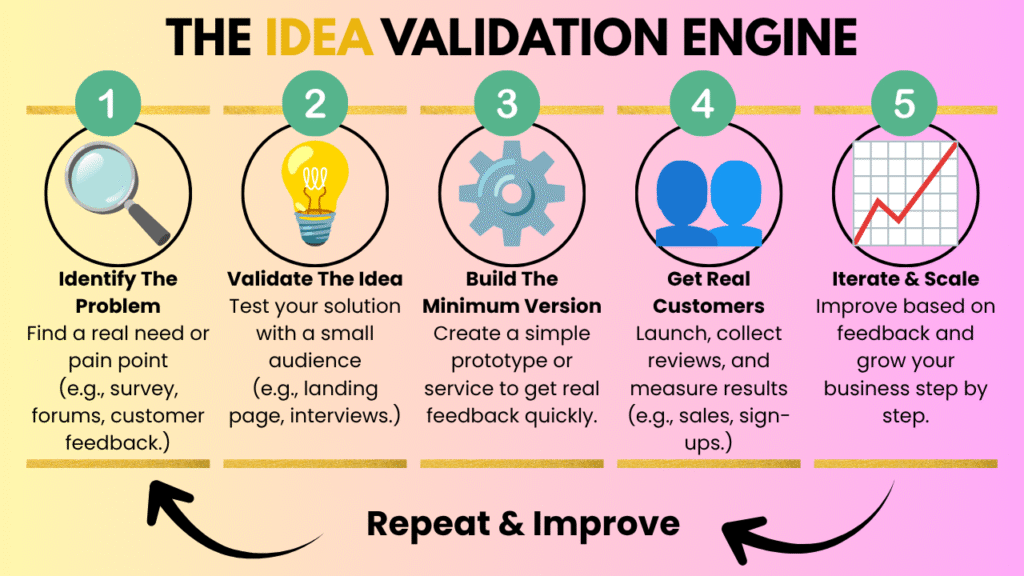
Steps to Validate Market Demand
- Identify a Specific Campus Pain Point: Speak with classmates or post in student forums to identify common problems (e.g., “Is anyone else struggling to find affordable editing for senior thesis papers?”).
- Build a Minimum Viable Offer (MVO): Create a clean one-page site using platform tools like Carrd or Wix, detailing what your service includes and the primary problem it solves.
- Secure 3 Beta Clients: Offer a discounted rate to your first three clients in exchange for honest testimonials and case studies. Once you have validated paying interest, you can confidently invest time and money into expansion.
4. Essential Software Tools to Stay Organized
Running a business while managing assignments, exams, and a social life requires lean systems. Utilizing free and low-cost software tools prevents operational tasks from taking over your schedule.
Recommended Operations Stack
- Operations & Notes (Notion / Trello): Organize client projects, track deadlines, store draft content, and build a master content calendar in one centralized location.
- Financial Accounting (Wave / QuickBooks): Track income, generate professional PDF invoices, monitor expenses, and maintain clear separation for end-of-year taxes.
- Design & Asset Creation (Canva / Adobe Express): Quickly design social media graphics, client proposals, presentation decks, and marketing flyers without advanced design training.
- Social Scheduling & Automation (Buffer / Metricool): Batch-schedule social media posts in advance so your brand stays active during busy exam weeks.
5. Setting Up Your Legal and Financial Structure
Handling administrative setup correctly from day one saves you from tax headaches and legal complications as your revenue grows.
Administrative Checklist for Student Founders
- Choose an Appropriate Business Structure: Business registration requirements vary by country and business type. A small service business may be able to start with a simple structure, while larger or higher-risk businesses may have additional registration or legal requirements. Check your local government or tax authority before making a decision.
- Open a Dedicated Bank Account: Never mix personal funds with business transactions. Open a business checking account or set aside a distinct account specifically to track income and expenses cleanly.
- Set Aside Money for Taxes: If your business income is taxable, keep a separate portion of your earnings available for potential tax obligations. The amount depends on your country, income level, business structure, and applicable tax rules.
Legal and tax requirements vary by location. This section is for general educational purposes, not legal or tax advice.
6. How to Land Your First 5 Paying Clients
Relying on paid advertising is rarely cost-effective when launching a low-capital side business. Instead, leverage warm networking and inbound value delivery to land your initial client base.
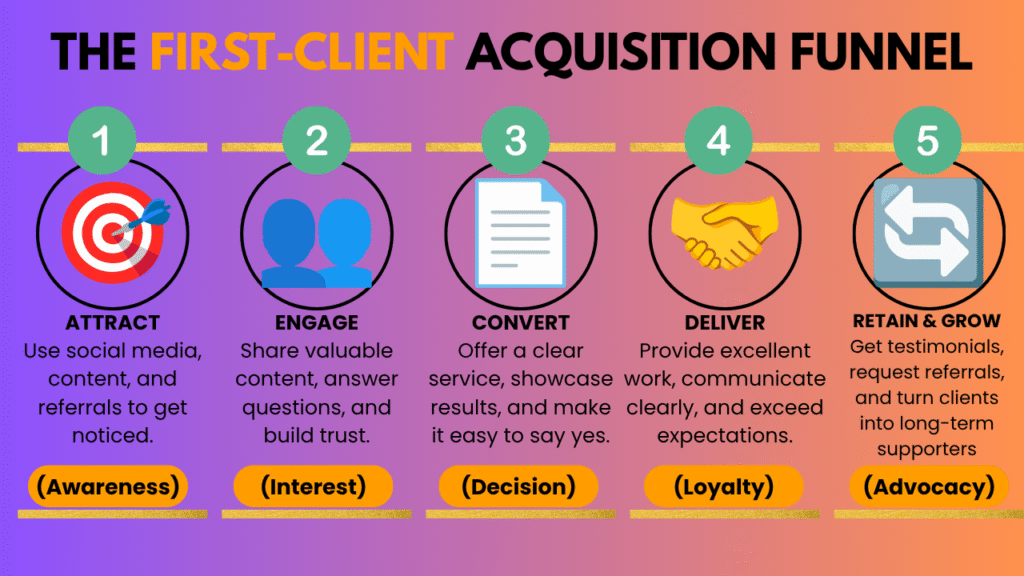
Effective Outreach Strategies
- Leverage Professional Platforms (LinkedIn): Optimize your LinkedIn profile to reflect your service offering (e.g., “John Doe | Video Editor for B2B Podcasters”). Share practical tips and short tutorials that demonstrate your expertise.
- Cold Outreach with Value: Identify local businesses with poor websites or inactive social media feeds. Reach out with a short, non-salesy message highlighting 2 or 3 quick improvements they can make right away.
- Build a Referral Program: Offer your current clients a percentage discount on their next month of service for every new paying client they refer to you.
7. Balancing Business Growth with Your Academic Performance
Protecting your GPA and mental well-being is critical when taking on additional work. If your business takes over your schedule, both your studies and client work will suffer.
Strategies for Managing Your Time
- Use Time Blocking: Reserve fixed hours during the week exclusively for client work, studying, and personal rest. Treat business time blocks with the same priority as attending a class.
- Communicate Exam Schedules Early: Send a courteous email to active clients two weeks before midterms or final exams, informing them of your modified working hours. Clients appreciate proactive communication and clear boundaries.
- Automate & Batch Tasks: Dedicate 2 to 3 hours every Sunday to draft client deliverables, outline blog posts, and schedule social updates for the entire week ahead.
Summary Launch Checklist for Student Entrepreneurs
Launch Step | Strategic Action Item | Status |
1. Skill Assessment | Identify 1 high-demand skill (writing, editing, tutoring, design) | Ready |
2. Offer Validation | Define a clear service offer and test demand with 3 beta clients | Ready |
3. Tool Setup | Set up Notion for workflow and Wave/QuickBooks for invoicing | Ready |
4. Profile Optimization | Update your social profiles (LinkedIn, X) to highlight your service | Ready |
5. Time Management | Set up weekly time-blocking to protect your studying and exam schedules | Ready |
Building a business while studying is a marathon, not a sprint. By starting small, keeping overhead low, leveraging free digital tools, and maintaining clear academic boundaries, you can build a sustainable business that generates reliable income long before graduation day.
Frequently Asked Questions
Flexible, digital-first stuff usually fits best. Freelance writing on Upwork, or managing social accounts for small brands, since you set your own hours around class.
Look honestly at what you’re already good at first. Strong in math or science? Tutoring through Chegg or TutorMe gets you clients fast without needing any real marketing budget behind it.
Definitely. Plenty of founders started small, a design side hustle on Canva, say, and grew it into a full agency over a few years. It also just makes your resume stand out more to recruiters looking through a stack of them.
Yeah, blogging on WordPress, becoming a virtual assistant, starting a YouTube channel about student life, all of it needs nothing more than a laptop and some patience, really.
Nail your niche down, get some kind of online presence up, and pick simple bookkeeping software early so you’re not untangling a mess of receipts later.
Not if you’re deliberate about it. Time-blocking and staying organized somewhere like Notion keeps both your grades and the business intact. The key’s really just choosing something scalable instead of something that eats every free hour you’ve got.
Honestly, the ceiling on earnings and the skills you pick up, sales, negotiation, marketing, tend to run a lot higher running your own thing than working an hourly retail shift somewhere.
Errand running, pet sitting through something like Rover, tech support for older neighbors—all of these stay in steady demand and build a local reputation fast through word of mouth alone.
AI’s creeping into pretty much everything now. ChatGPT for research, Midjourney for quick visual assets, Buffer for scheduling. Staying reasonably current with these keeps you competitive without much extra effort on your end.
Usually, once your client load outgrows what you can personally handle alone. That’s the point to start bringing on other students and shifting your own time toward finding new business instead of doing every bit of the work yourself.