How to Grow Your Social Media Organically: The Complete Step-by-Step Blueprint
A common misconception in digital marketing is that organic social media growth is a slow, painful grind, while anyone with an advertising budget can easily bypass the hustle.
The reality is quite different. While paid ads can deliver instant impressions, Paid advertising can generate visibility quickly, long-term trust usually requires consistent value and a positive experience beyond the ad itself. When an ad campaign ends, the traffic stops immediately. Organic growth, on the other hand, builds a compounding digital asset—an engaged audience that sticks around because they genuinely value your content.
In this comprehensive guide, we will break down how to build an organic social media engine from scratch—covering platform strategy, content frameworks, algorithm mechanics, engagement tactics, and analytics.
1. Organic Growth vs. Paid Acquisition
To build a sustainable digital presence, you must understand the structural differences between organic distribution and paid advertising.
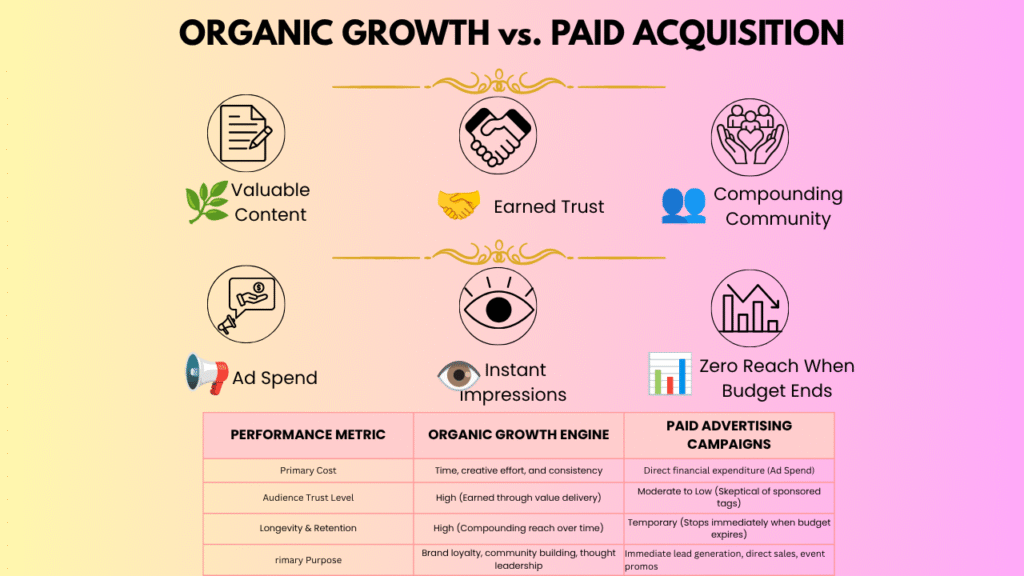
Performance Metric | Organic Growth Engine | Paid Advertising Campaigns |
Primary Cost | Time, creative effort, and consistency | Direct financial expenditure (Ad Spend) |
Audience Trust Level | High (Earned through value delivery) | Moderate to Low (Skeptical of sponsored tags) |
Longevity & Retention | High (Compounding reach over time) | Temporary (Stops immediately when budget expires) |
Primary Purpose | Brand loyalty, community building, thought leadership | Immediate lead generation, direct sales, event promos |
Neither approach is inherently flawed, but relying entirely on paid ads without a solid organic foundation creates an unstable brand presence. Organic content establishes your authority, while ads simply amplify it.
2. Choosing Your Primary Platform Matrix
Attempting to maintain a dominant presence across every social media platform simultaneously leads to creator burnout and mediocre content quality. Instead, match your content capabilities with where your target audience actively spends their time.
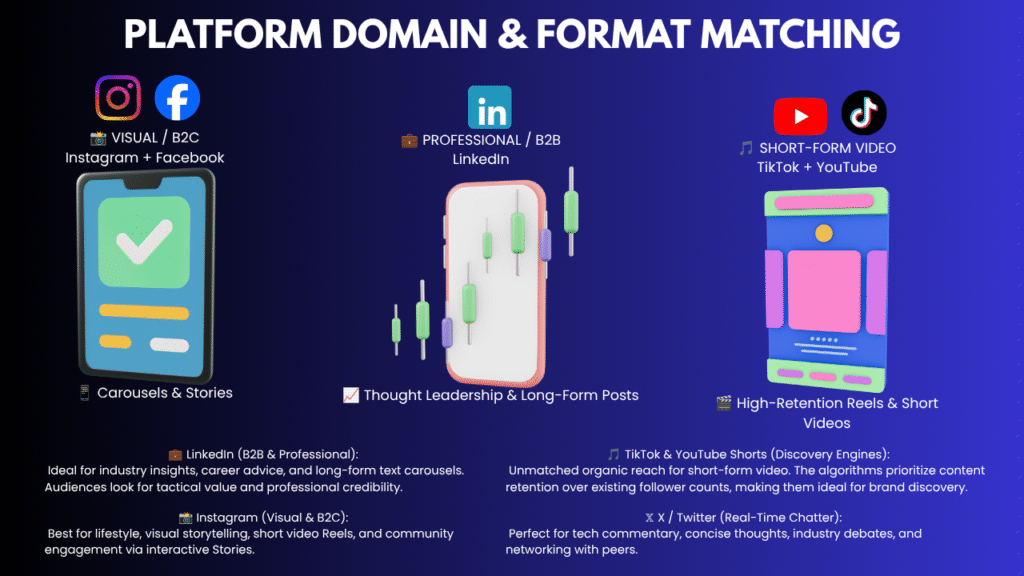
Platform Selection Guide:
- LinkedIn (B2B & Professional): Ideal for industry insights, career advice, and long-form text carousels. Audiences look for tactical value and professional credibility.
- Instagram (Visual & B2C): Best for lifestyle, visual storytelling, short video Reels, and community engagement via interactive Stories.
- TikTok & YouTube Shorts (Discovery Engines): Unmatched organic reach for short-form video. The algorithms prioritize content retention over existing follower counts, making them ideal for brand discovery.
- X / Twitter (Real-Time Chatter): Perfect for tech commentary, concise thoughts, industry debates, and networking with peers.
3. Optimizing Your Social Media “Storefront”
Before driving traffic to your profile, ensure your landing area converts casual visitors into followers. Within three seconds of viewing your profile, a visitor should understand three things: Who you are, what value you provide, and what action to take next.
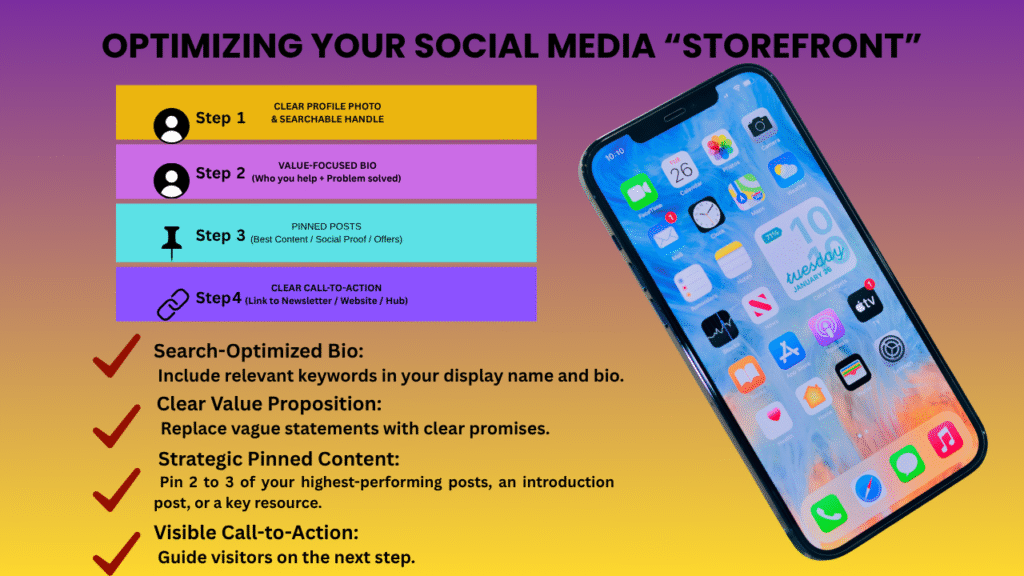
Checklist for a High-Converting Profile:
- Search-Optimized Bio: Include relevant keywords in your display name and bio (e.g., “John Doe | B2B SaaS Copywriter” rather than just “John Doe”).
- Clear Value Proposition: Replace vague statements with clear promises (e.g., “Helping creators scale from 0 to 10k email subscribers”).
- Strategic Pinned Content: Pin 2 to 3 of your highest-performing posts, an introduction post, or a key resource to immediately anchor your authority.
- Single Clear Call-to-Action (CTA): Give visitors one clear link to click, such as a free resource, newsletter signup, or portfolio link.
4. The 80/20 Content Strategy Framework
A feed that exclusively pitches products or services alienates users. To maintain audience interest, balance educational value, entertaining narratives, and promotional updates using the Value Matrix.
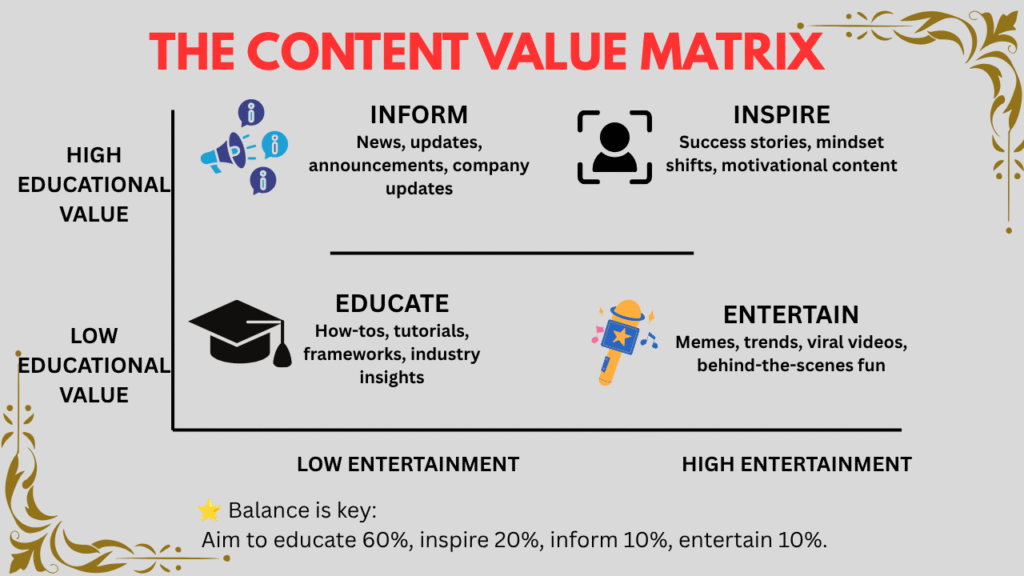
The Three Core Content Pillars:
1. Educational Content (Builds Authority)
- Format: Multi-page carousels, tactical step-by-step posts, industry breakdowns.
- Goal: Solves a specific, painful problem for your ideal follower for free.
2. Relatable / Personal Content (Builds Connection)
- Format: Personal stories, behind-the-scenes failures, lessons learned over time.
- Goal: Humanizes your profile so followers connect with an actual person, not an automated broadcast.
3. Conversational Content (Builds Engagement)
- Format: Targeted questions, polls, controversial (but constructive) industry opinions.
- Goal: Encourages users to leave comments, which signals quality to platform algorithms.
5. Hook Engineering & Post Formatting
Even the most valuable advice gets ignored if the opening line fails to stop the scroll. The first 3 seconds of a video or the first line of a text post determine whether a user stays or scrolls past.
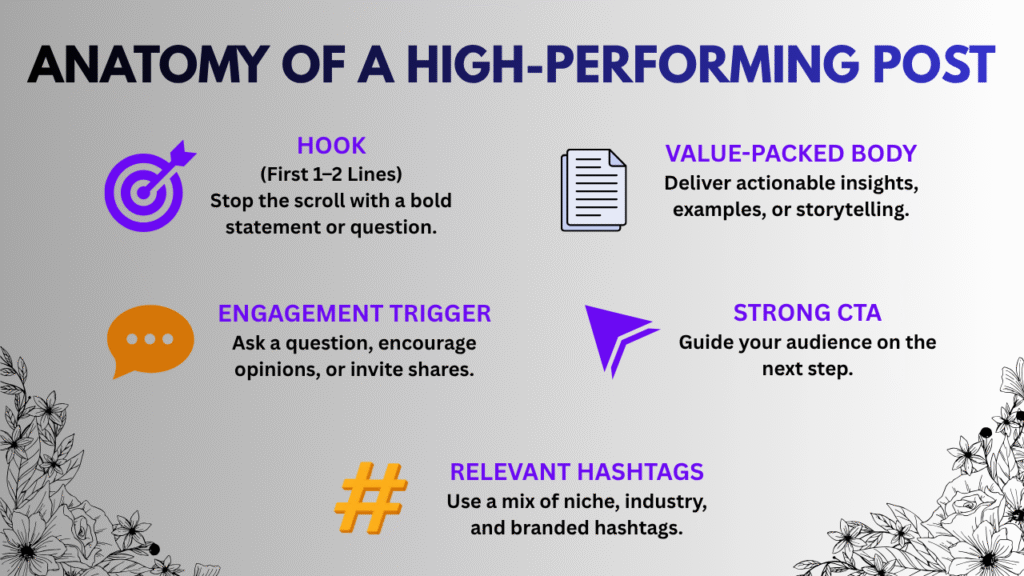
High-Converting Hook Templates:
- The Problem-First Hook: “Most creators waste 10 hours a week on social media because they ignore this one workflow setup…”
- The Curiosity Gap: “We tested 5 different video formats over 30 days. Here is the unexpected format that drove 80% of our reach…”
- The Direct Transformation: “How to rebuild your content schedule in 30 minutes a week (without burning out):”
Formatting Principles for Mobile Readers:
- Avoid Wall-of-Text Blocks: Keep paragraphs to 1 or 2 concise lines max.
- Use Structural Anchors: Utilize bullet points, bolded subheadings, and clear visual spacing.
- Avoid Vague Endings: Instead of ending a post with “Thoughts?”, ask a specific question: “Which of these three tools do you currently use in your stack?”
6. The Two-Way Engagement Engine
Publishing content and immediately closing the app—often called “ghost posting”—severely limits organic growth. Social media algorithms are designed to reward accounts that keep users engaged on the platform.
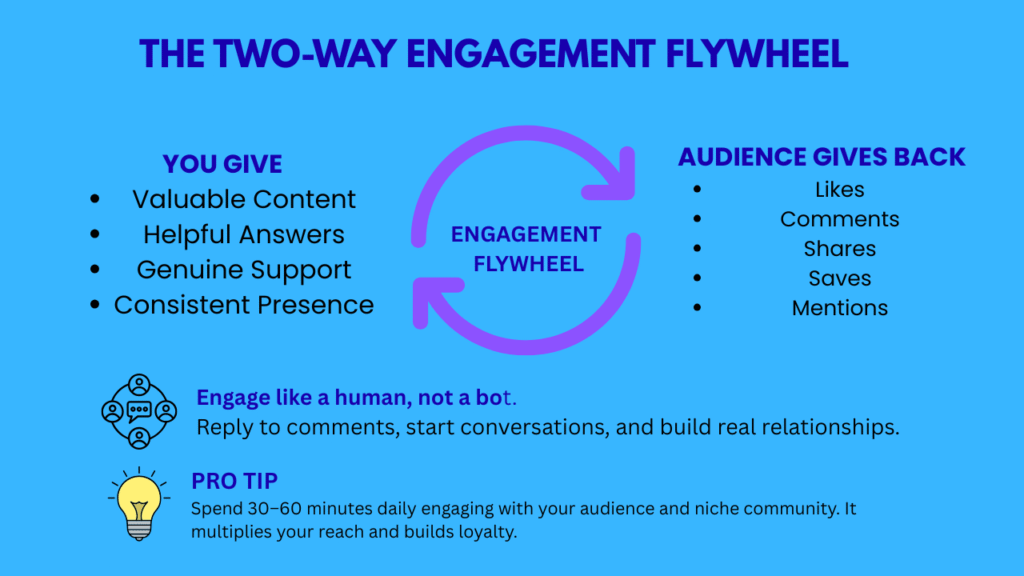
Strategic Engagement Tactics:
- The Golden Hour Rule: Stay active on the platform for 15 to 30 minutes immediately after posting. Reply promptly to every incoming comment to build early post momentum.
- Proactive Outbound Engagement: Spend 15 minutes a day leaving thoughtful, high-value comments on posts written by industry peers or targeted accounts. Avoid generic comments like “Great post!”; instead, contribute an additional point or perspective.
- Community DM Strategy: Treat direct messages as private networking opportunities. When a new follower engages deeply with your content, send a brief, personalized welcome message without trying to sell anything.
7. Recommended Tools Stack
You do not need an enterprise software budget to manage an efficient content operation. Using a lean set of reliable tools saves time while maintaining high quality.
Category | Tool Recommendation | Primary Function |
Scheduling & Analytics | Cross-platform scheduling, automated publishing, unified analytics | |
Visual Design | Fast visual asset creation, carousel designs, template management | |
Video Production | Short-form video editing, auto-captions, transition effects | |
Content Organization | Centralized content calendar, topic ideas, draft storage |
Note: While scheduling tools simplify execution, community engagement and comment replies should always be handled manually to preserve authenticity.
8. Key Metrics: Moving Beyond Vanity Numbers
Follower count gets the most attention, but it is often a misleading indicator of audience loyalty or business success. Focus on metrics that signal genuine user interest:
Metrics That Actually Matter:
- Saves & Bookmarks: Indicates that a user found your content so useful they plan to reference it again. Algorithms treat saves as a primary quality indicator.
- Shares & Reposts: Shows that your content helped someone express an opinion or deliver value to their own network.
- Detailed Comment Rate: Demonstrates that your message resonated deeply enough to prompt a thoughtful written response.
- Profile Visit Conversion Rate: The percentage of profile visitors who click your follow button or link-in-bio.
Summary Pre-Flight Checklist for Organic Growth
Execution Step | Daily / Weekly Action Item | Status |
1. Profile Audit | Clear value proposition, searchable keywords, and pinned posts set | Ready |
2. Content Batching | 1 to 2 weeks of educational and narrative posts drafted ahead | Ready |
3. Hook Optimization | Opening lines edited for clarity, value, and strong formatting | Ready |
4. Daily Engagement | 15 minutes of inbound comment replies and outbound networking | Ready |
5. Analytics Review | Weekly check of saves, shares, and high-converting post formats | Ready |
Organic social media growth is ultimately a compounding process. By consistently offering real utility, maintaining a clear personal voice, and engaging directly with readers, you construct an authentic online network that scales naturally over time.
FAQ
Basically, growing your audience without paying for reach, so good content, real engagement, actual community building instead of just buying your way in.
Fix the profile first, honestly. Clear bio, a photo people recognize, a link to your site. Then post consistently and talk to people in your niche instead of just shouting into the void and hoping.
Yeah, mostly through trust. An active audience acts like social proof; people trust brands that look alive online. Also cuts acquisition costs over time since organic content keeps working long after you hit post, unlike an ad.
Ads are fast but temporary. Organic builds actual personality and a human connection ads usually can’t fake, which leads to better retention down the line, and honestly, better word of mouth too.
Sure, Buffer, Hootsuite, Later, all fine for scheduling. Canva makes decent visuals possible even without design experience if that’s holding you back.
When you’re building real authority, as a thought leader, a consultant, whatever your thing is. Also, just the obvious pick if there’s no big ad budget sitting around to work with.
TikTok and Reels usually win for discovery these days. LinkedIn’s still king for B2B stuff. Mostly, though, it just depends on where your audience already spends their time, no universal answer here.