Digital Marketing Tips That Actually Work: A Practical Small Business Growth Blueprint
Starting a business online can feel overwhelming. Almost every new entrepreneur hits the exact same wall: how do you stand out and attract paying customers when thousands of competitors are shouting into the exact same feed?
There is no secret magic trick to online growth. Sustainable success comes down to a clear strategy, showing up consistently, and listening closely to what your specific audience responds to.
This guide is a practical, step-by-step masterclass designed to cut through the jargon. Whether you are running a solo shop or managing a growing team, these core principles hold true across every niche.
Key Takeaways
- Trust Beats Attention: Earn your audience’s confidence before asking them to open their wallets.
- Master Organic Search: Sustainable SEO habits beat buying temporary ad traffic every single time.
- Treat Content Like a System: Consistency beats intensity when building brand authority.
- Rely on Real Analytics: Base your ad spend and marketing budget on conversion data, not gut feelings.
- Focus on Retention: A loyal email subscriber list is your most valuable digital asset.
1. Getting Your Bearings in Modern Digital Marketing
Digital marketing moves fast. Social algorithms update without warning, audience habits shift, and tactics that delivered high ROI last year might barely move the needle today.
It is easy to feel like you are chasing a moving target. However, beneath all the noise, the fundamental mechanics of customer acquisition remain remarkably stable.
Why Strategy Matters More for Small Businesses
If you run a small business, strategic digital marketing is your single best opportunity to compete with industry giants. You do not need a multi-million dollar advertising budget to win market share; you need precision.
A well-targeted campaign can often outperform a broader campaign when the audience is more relevant to the offer. When you stop paying to reach people who were never going to buy from you, your marketing budget goes significantly further.
2. Core Pillars of an Effective Digital Strategy
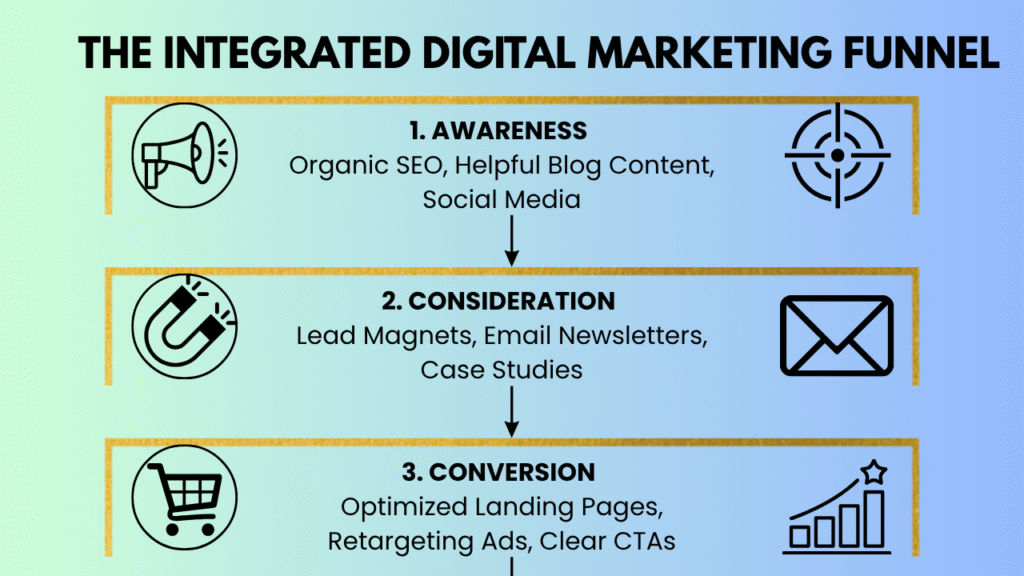
Successful online marketing balances organic visibility with paid promotion, continuously refined by analytics data.
Marketing Channel | Primary Strategic Goal | Core Key Performance Indicator (KPI) |
Search Engine Optimization (SEO) | Organic Traffic & Authority | Keyword Rankings & Organic Session Growth |
Social Media Marketing | Community Building & Awareness | Engagement Rate (Shares, Saves, Comments) |
Email Marketing | Nurturing & Direct Conversions | Click-Through Rate (CTR) & Revenue Per Email |
Pay-Per-Click (PPC) Advertising | Immediate Targeted Reach | Cost Per Acquisition (CPA) & Return on Ad Spend (ROAS) |
3. Defining Your Ideal Customer Profile & SMART Goals
Everything in marketing becomes simpler once you know exactly who you are talking to. When you understand your ideal customer’s pain points, your messaging stops sounding like a generic sales pitch and starts sounding like a direct solution to their problem.
Building Actionable Buyer Personas
A buyer persona is a semi-fictional representation of your ideal client, grounded in market research and real customer data. While age, income, and location are helpful demographics, the real magic happens when you identify their daily frustrations, desires, and purchasing triggers:
- What keeps them awake at night related to your industry?
- What specific goals are they trying to achieve this quarter?
- Where do they actively look for trusted advice before making a buying decision?
Setting Goals You Can Actually Track
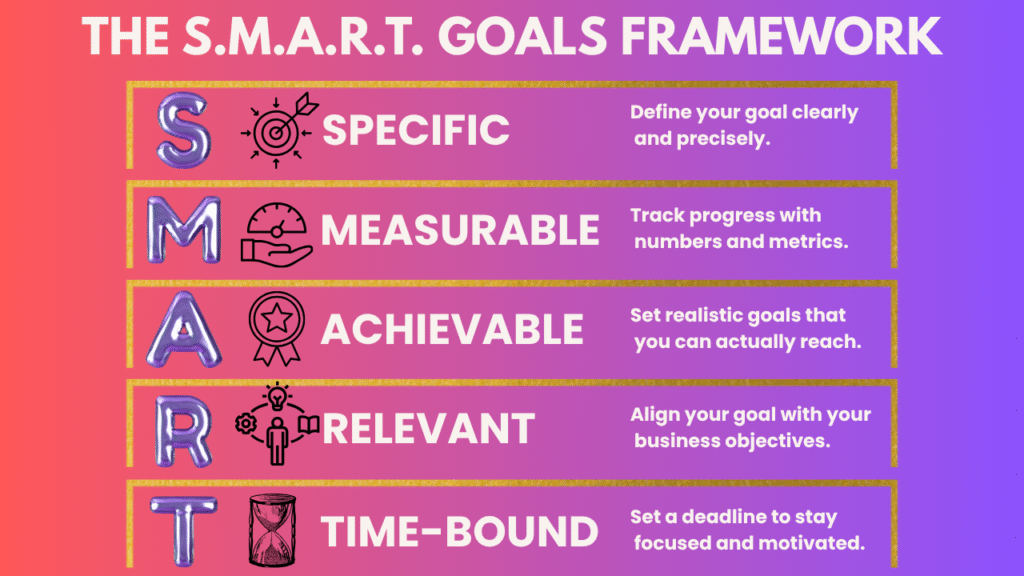
Once your target audience is defined, align your daily activities with actionable business targets using the S.M.A.R.T. goal framework:
4. Building a High-Converting Digital Storefront
Skipping your core technical foundation will cause even the most creative campaigns to fail. Your website is the central engine of your online presence—every social post, email newsletter, and search ad ultimately leads back here.
Website Optimization Essentials
Your website must load instantly, look flawless on mobile devices, and make purchasing effortless. Slow-loading pages can increase abandonment and create a poor user experience, so monitor page speed and Core Web Vitals alongside your conversion data.
Crucial UX & Performance Habits:
- Compress Image Assets: Large image files are the primary cause of slow web pages. Use modern formats like WebP to maintain crisp visual quality at tiny file sizes.
- Mobile-First Responsive Design: Test your navigation menus and checkouts on smartphones, not just desktop monitors.
- Unambiguous Calls-to-Action (CTAs): Ensure your primary purchase or booking buttons stand out visually with high contrast colors and clear phrasing (e.g., “Claim Your Free Consultation” instead of “Submit”).
5. Content Marketing and Search Engine Optimization (SEO)
Can you grow organic website traffic without spending thousands on paid ads? Absolutely. For small businesses, For many small businesses, SEO can become a cost-effective long-term source of qualified traffic when the site consistently meets search intent.
On-Page SEO Practices That Drive Traffic
SEO is not about tricking an algorithm; it is about organizing your knowledge so that both human readers and search engine crawlers understand the value you offer.
- Focus on Intent-Driven Keywords: Utilize tools like Google Keyword Planner, Ahrefs, or AnswerThePublic to find phrases your prospects actually search for. Focus on specific, intent-driven queries that closely match what your target customer is trying to find. While these have lower overall monthly search volume, they carry much higher commercial purchase intent.
- Optimize On-Page Structural Elements: Place your primary keyword naturally into your H1 title, subheadings (H2, H3), meta description, URL slug, and image alt text.
- Publish In-Depth, Comprehensive Guides: Creating comprehensive content that clearly satisfies search intent can improve its usefulness to readers and its ability to compete in search results. Aim to write clear, authoritative content that eliminates the need for the user to visit another site for answers.
6. Social Media Engagement That Drives Real Loyalty
Social media functions best as a multi-way conversation, not a broadcast bullhorn. Instead of collecting passive followers, focus on building an active community of brand advocates.
Selecting the Right Platforms
Trying to maintain an active presence across every social platform leads to creator fatigue and low-quality output. Focus deeply on one or two channels where your ideal clients already gather:
- LinkedIn: Best for B2B services, professional networking, industry commentary, and corporate lead generation.
- Instagram & Pinterest: Highly effective for visual consumer brands, lifestyle products, personal branding, and e-commerce.
- YouTube & TikTok: Dominant channels for short-form educational video content, product demonstrations, and brand discovery.
Authentic Engagement Tactics
Relatable content can feel more engaging than overly polished corporate messaging, especially when it reflects real customer experiences or useful lessons. Reply to comments promptly, run interactive polls, ask specific questions in your post captions, and acknowledge user feedback publicly to establish long-term community trust.
7. Email Marketing: Your Highest-ROI Asset
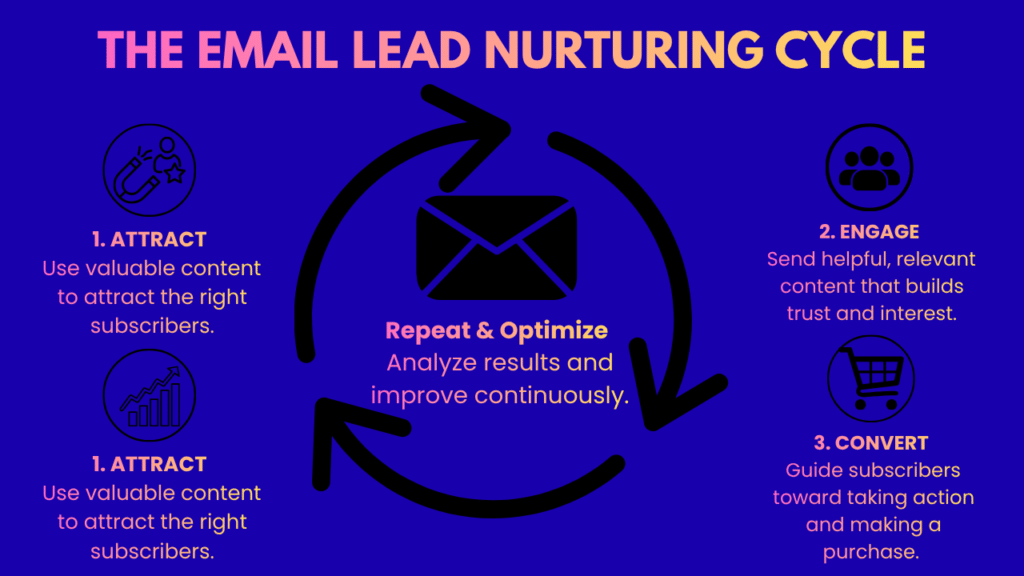
Social media algorithms change constantly, butYour email list is a direct communication channel that is less dependent on social platform algorithms. Email marketing can deliver strong returns when businesses build a relevant, permission-based list and send useful, targeted campaigns.
Email List Building Best Practices
Never buy email lists. Purchased lists result in poor email deliverability rates, high spam complaints, and severe damage to your domain reputation.
Focus entirely on permission-based growth by offering a compelling Lead Magnet—such as a free PDF checklist, discount code, video training, or template—in exchange for a visitor’s email address.
Industry Benchmarks to Aim For:
- Email Open Rate: Target 25% to 35%+
- Click-Through Rate (CTR): Target 3% to 6%+
- Unsubscribe Rate: Keep strictly below 0.5%
Segment your email list based on subscriber interest, past purchase history, or engagement level so that every subscriber receives messages tailored directly to their needs.
Example: Small business
Suppose you run a local clothing store. Instead of posting random product photos every day, you could create three content pillars: styling tips, customer questions, and product demonstrations. Then track which type generates profile visits, inquiries, and sales.
8. Data-Driven Marketing: Measuring What Matters
Turning raw analytics numbers into actionable business decisions is what separates high-growth marketers from businesses that waste money repeating ineffective campaigns.
Focus on core business metrics that directly impact your bottom line rather than superficial vanity metrics like total likes or impressions.
Metric | Marketing Focus Area | Business Impact |
Conversion Rate (CR) | Landing Page Performance | Higher Sales Volume & Revenue |
Cost Per Acquisition (CPA) | Ad Campaign Efficiency | Reduced Customer Acquisition Overhead |
Customer Lifetime Value (CLV) | Client Retention & Service Quality | Increased Long-Term Business Profitability |
Bounce Rate | User Experience (UX) & Content Quality | Longer Session Duration & Organic Rankings |
9. Final Pre-Flight Launch Checklist
Before launching your next digital marketing initiative, review this step-by-step checklist to ensure your campaigns are built for maximum performance:
Step | Strategic Objective | Execution Status |
1. Audience Research | Buyer personas clearly defined with specific pain points mapped | Ready |
2. Technical Foundation | Website load speed optimized and mobile responsiveness verified | Ready |
3. Analytics Tracking | Google Analytics 4 (GA4) and conversion tracking pixels active | Ready |
4. On-Page SEO | Long-tail target keywords naturally integrated into titles and headers | Ready |
5. Lead Nurturing | Opt-in lead magnet and welcome email sequence configured | Ready |
By implementing these strategic digital marketing fundamentals, focusing on value delivery, and relying on data-driven decision-making, you build a resilient customer acquisition engine that fuels predictable, long-term business growth.
Frequently Asked Questions
It’s the strategic use of online tools and a bit of audience psychology to reach people where they already spend time. Start with a clear value proposition and a mobile-friendly website; everything else builds from there.
Usually, it starts with SEO and content that’s genuinely useful, not just optimized. HubSpot Academy has free courses that walk through optimizing your site for terms people are actually searching; that’s what eventually gets you onto page one of Google.
Mostly, precision and measurement. A billboard can’t tell you who saw it or whether they bought anything. Digital campaigns let you track every click and conversion through tools like Google Analytics, so your budget goes toward what’s demonstrably working.
Depends on the stage. Instagram tends to work well for awareness. Targeted email through something like Mailchimp works better for retention, once someone’s already in your world.
Yes, though it takes more time instead of more money. Engaging in relevant Reddit communities or making content that resonates on TikTok costs nothing but effort. Paid ads speed things up, but consistent organic engagement still builds the most durable kind of community.
Airbnb’s use of user-generated content is a good one. So is Glossier turning regular customers into informal influencers. What both have in common is authenticity, an actual two-way conversation instead of a company just talking at people.
Semrush is solid for SEO, and Salesforce still holds up well for CRM. Google Analytics remains essential for measurement, and a scheduling tool like Buffer or Later saves time managing social content across platforms.